Why Does Creativity Erode When The Work Becomes A Job?
A friend asked this question above. So the first thing to do is to find the difference between the two situations:

What Is The Difference Between Doing Work For Yourself vs. As A Job?
That transition creates a fundamental shift in the environment where creativity lives.
Most of us start with work that is close to our hearts. Some of that work resonates — and people reach out to hire you.
Personal work has no wrong answers. You experiment, you miss, you try again. Nobody is watching.
Hired work is different. Now there's a client. A brief. A due date. Someone who has opinions about what you're making — and the authority to reject it. That shift from freedom to accountability is where most creatives quietly lose their nerve.
What Are the External and Internal Pressures That Come With Creative Work as a Job?
Two new pressures enter the picture — and they require completely different responses.
To understand why creativity suffers when work becomes professional, it helps to separate what is actually happening into two distinct forces. The first is external: clients with different perspectives on what the work should be, timelines that leave little room for exploration, and constraints that feel like they were designed without the creative process in mind. The second is internal: the fear of judgment, the need to perform, and the creeping instinct to play it safe rather than risk getting it wrong.
These two pressures feel connected — and they are — but they are not the same problem. Treating them as one is where most creatives get stuck.
What Can You Actually Control — and What Can't You?
You cannot change most external pressures — but you can completely change your internal response to them.
The client's timeline is the client's timeline. The brief is the brief. You can influence these things at the margins — good communication helps — but you cannot make them disappear. Clients with different perspectives on your work are not obstacles. They are part of the reality of professional creative life.
What you can change, completely and significantly, is what is happening inside you. This is where most conversations about creative pressure go wrong. They focus entirely on the external environment — find different clients, take on fewer projects, set clearer boundaries — without ever addressing the internal one.
Your inner creative process is not fixed. It is not a personality trait you were either born with or without. It is a set of skills. And skills can be built.
What Is Creativity, Really?
Creativity is problem solving — the belief that no problem has only one right answer.
There is a tendency to mystify creativity. To treat it as inspiration that visits certain people and not others. To speak about it as though it is a gift rather than a practice. It is neither.
Creativity is the ability to recognize — and genuinely believe — that no problem has only one correct answer. That belief sounds simple. In practice, it is surprisingly hard to hold onto when a client is waiting, a deadline is approaching, and the pressure to deliver something acceptable is louder than the impulse to deliver something remarkable.
The creatives who maintain their confidence under pressure are not more talented. They are better at a specific cognitive skill.
What Is the Cognitive Skill Behind Creative Confidence?
Divergent thinking — the ability to generate multiple solutions before committing to one — is the skill worth building.
Instead of moving immediately toward the most obvious answer, divergent thinkers stay in the generative phase longer. They explore more paths, entertain more possibilities, and resist the pull toward the safe choice.
Research consistently shows that creative people are not smarter. They are better at divergent thinking. And divergent thinking is a learnable skill — not a fixed trait.
I've written in depth about how divergent thinking develops, the neuroscience behind it, and how to train it deliberately in a separate journal article. If this is resonating, that piece is worth reading next.
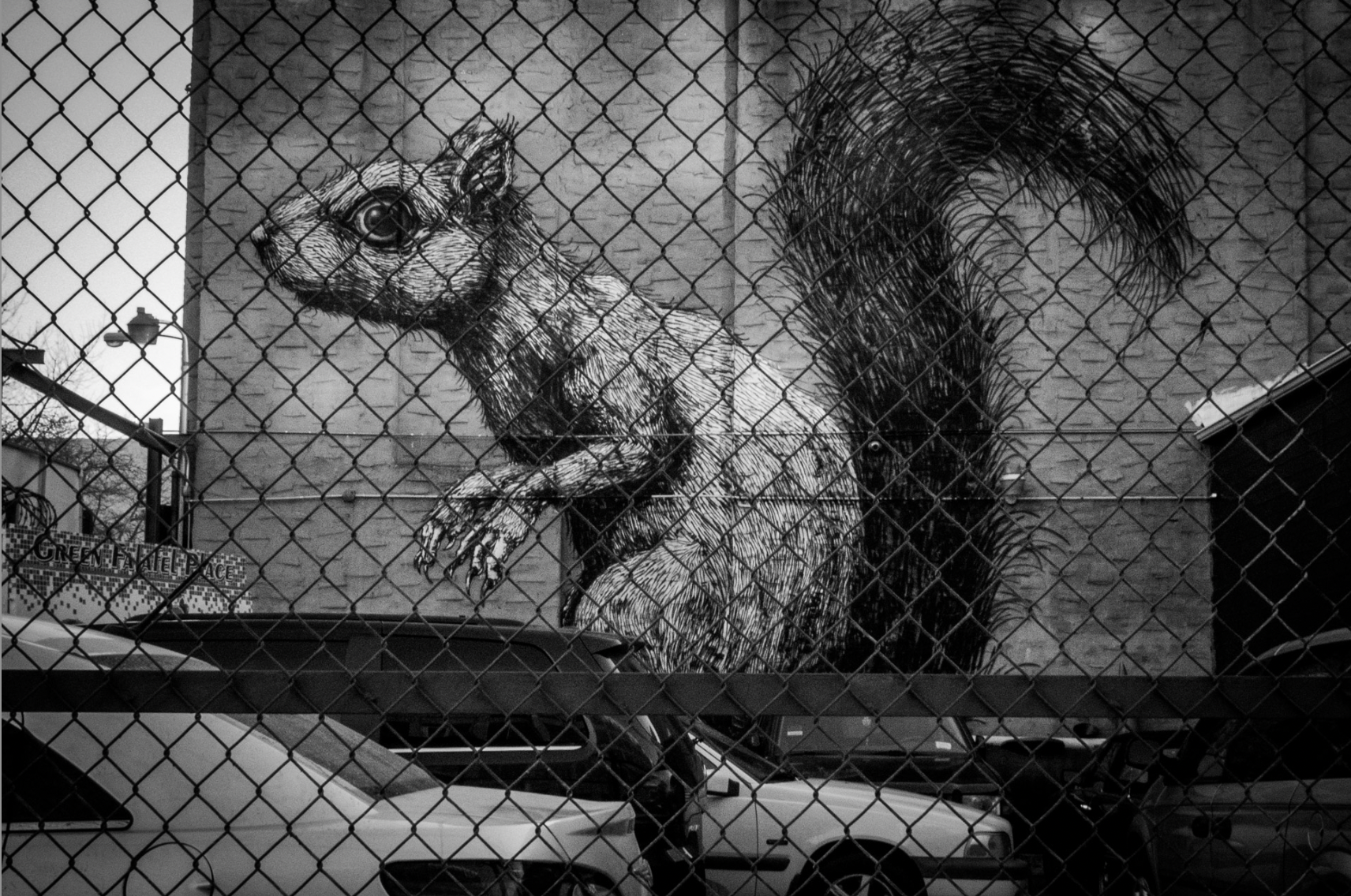
© Erwin Darmali
How Do You Develop Divergent Thinking?
Curiosity — a genuine fascination with the fact that things can be done differently — is the engine.
Divergent thinking doesn't develop in a vacuum. It develops in people who are not just intellectually open to different solutions, but actively interested in them. Excited by them.
This is the difference between a creative who sees a constraint as a problem and one who sees it as a prompt. The constraint hasn't changed. The relationship to it has. That relationship is curiosity. And curiosity, practiced consistently, becomes something larger: creativity as a way of life.
What Does "Creativity as a Way of Life" Actually Mean?
It means bringing a generative, possibility-seeking mindset to every situation — especially the constrained ones.
Creativity as a way of life is not an aesthetic. It is not a personality type. It is not reserved for artists or photographers or designers. It means the same open, exploratory thinking you bring to your best work also shows up when the brief is tight, the client has a strong point of view, and the timeline is unrealistic.
If creativity is only available to you when conditions are perfect, it is not yet a way of life. It is a luxury. The goal is to make it structural — woven into how you think, not dependent on how you feel.
How Do You Start Rebuilding Creative Confidence in Practice?
Four orientations — not tactics — worth practicing consistently.
These are not steps on a checklist. Creativity doesn't respond well to checklists. But these shifts in orientation, practiced over time, change how you move through creative work under pressure.
See constraints as creative information, not obstacles. Every constraint tells you something. A tight brief tells you where the boundaries are — and boundaries are where interesting decisions happen. Ask: what is this constraint making possible that wouldn't exist without it?
Stay in the generative phase longer. When a brief arrives, resist the instinct to immediately move toward a solution. Give yourself even fifteen minutes to generate alternatives you have no intention of using. This trains divergent thinking more than almost anything else.
Get comfortable being uncomfortable. Discomfort in creative work is not a warning sign. It is almost always a signal that you are about to do something worth doing. Learn to read that feeling as an indicator, not a deterrent.
Separate the making from the judging. Fear collapses making and evaluating into a single moment — which means nothing unusual survives long enough to be considered. Make first. Assess later. Keep them separate.
Is the Mindset Itself Part of the Creative Practice?
Yes — and the creatives who keep growing treat it that way.
There is a version of this conversation that ends with tactics. Better client management. Smarter scoping. A more disciplined process. Those things matter. But they are downstream of something more fundamental.
The creatives whose work deepens rather than flattens over time are the ones who treat their mindset as part of their craft. Not separate from it. Not secondary to it.
Your creative confidence is not a fixed resource that depletes under pressure. It is a capacity that can be developed, trained, and protected — even when the work feels like a job. Especially then.
Where Do You Go From Here?
Start with the question — then go deeper on the skill.
When did the work start feeling like a job — and what did you do about it? That question has a different answer for every creative. But the fact that you're reading this suggests you already know the feeling.
That feeling is not a verdict. It is a starting point.
To go deeper on divergent thinking — the cognitive skill at the center of all of this — read this next.
And if you're at a point where you want to work through this with someone, that's exactly what my coaching is built for.
Erwin Darmali is a documentary filmmaker, photographer, and creative coach based between Jakarta and Pasadena. His coaching practice helps creatives find — and trust — their own voice.