Divergent Thinking In Photography
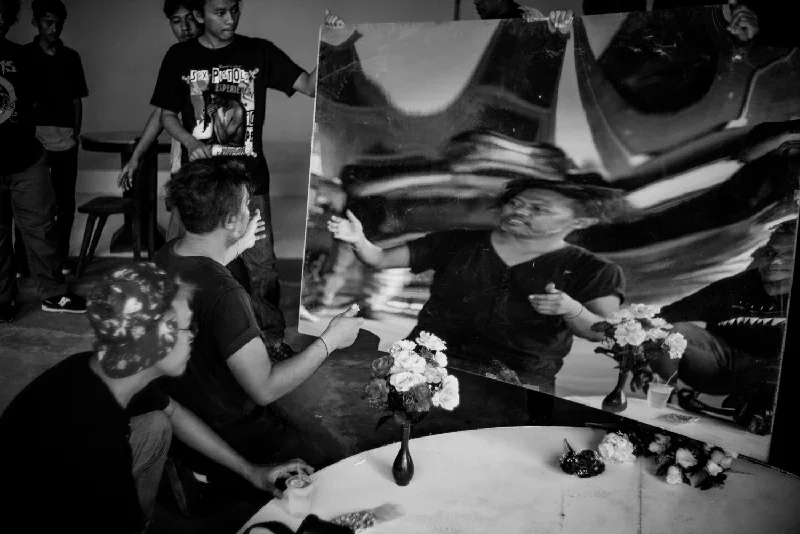
Divergent Thinking: The Hidden Skill Behind Every Photographer Who Always Seems to Be in the Right Place
The photographers who always seem to be in the right place didn't find it by luck. They saw it before they walked there.
There is a skill almost no one teaches in photography education. It is not about exposure or composition or even timing. It is the cognitive ability to hold multiple possibilities open simultaneously — to see not just what is in front of you, but what could be in front of you if you moved, waited, or turned around entirely.
Cognitive scientists call this divergent thinking. In my work as a documentary filmmaker, photographer, and photography coach, I have come to believe it is the single most underrated skill in the field. And unlike natural talent or an intuitive eye, it is learnable.
What Is Divergent Thinking in the Context of Photography?
Divergent thinking is the ability to generate multiple possible responses to a single prompt. In psychology, it sits in contrast to convergent thinking — the ability to identify the one correct answer to a well-defined problem. Both are useful. But in photography, convergent thinking is what most of us are trained to do: find the frame, press the shutter.
Divergent thinking asks something different. It asks: what are all the possible frames available to me right now? What would this scene look like from ten steps to the left? What if I turned around and photographed the reaction instead of the action? What is the photograph that exists here in fifteen minutes, when the light has moved and the crowd has thinned?
Most photographers see one frame — the frame directly in front of them. Divergent thinking opens the aperture of possibility before the camera's aperture opens.
Divergent thinking opens the aperture of possibility before the camera's aperture opens.

Why Most Photographers Stay Fixed in One Position
This is not a failure of vision. It is a failure of habit.
When we encounter a moment unfolding in front of us, the instinct is to respond immediately — to raise the camera and capture what we see. This instinct is trained into us by years of practice and reinforced by the fear of missing the shot. We become reactive photographers, responding to what is already happening rather than positioning ourselves for what is about to happen.
The result is that most photographers photograph the same moments from the same positions as everyone else standing in the same room. The work begins to look uniform — technically correct, emotionally predictable.
The photographer who consistently produces work that feels different, unexpected, that makes viewers ask how they got there — that photographer has trained a different reflex. Not faster hands. A wider mind.

How to Begin Training Divergent Thinking
There is no single exercise that builds this skill overnight. It is a daily reorientation of how you encounter a scene. Here is how I approach it, and how I teach it:
1. Arrive before you raise the camera.
When I arrive at a location, I give myself one rule: I do not raise the camera until I have walked the space. I am not looking for the shot. I am mapping the possibilities. Where does the light fall in ten minutes? Where will people move when the energy shifts? Which angle makes the background work for me rather than against me? This habit alone changes what I see.
2. Practice the four directions.
Before pressing the shutter on any significant moment, look deliberately in four directions: ahead, left, right, behind you. Ask which of these perspectives gives the moment the most meaning. This does not need to take more than five seconds. Over time, it becomes automatic. You stop assuming that the best angle is the one you arrived at by accident.
3. Photograph what is not happening yet.
Train yourself to ask: what will happen here in the next thirty seconds? Where will people move? What emotion will follow this one? Anticipatory positioning — choosing your spot based on what you foresee rather than what you see — is the highest expression of divergent thinking in practice. It is the difference between documenting and storytelling.
4. Review your contact sheets divergently.
After a shoot, study your contact sheets not just for the best image but for the positions you never occupied. Look at your selects and ask: where else could I have been standing? What perspective was available that I did not take? This retrospective practice builds forward-looking awareness over time.
Divergent Thinking and Anticipating Moments in Documentary Work
In documentary and event photography, anticipation is everything. The decisive moment — to borrow Cartier-Bresson's phrase — is rarely found by waiting in one place. It is found by being in the right place before the moment arrives. And that requires seeing the possibility of the moment before it exists.
Whenever I am documenting a subject, an artist, an event, my strongest images did not come from following the action. They came from reading the room — from positioning myself at the optimal angles that revealed exactly what I want to communicate about them. Divergent thinking is what allowed me to see those angles before anything had happened, or at least, to move swiftly to place as it unfolds.
This is why I believe this skill matters more in documentary and event work than in almost any other genre. You cannot reset the scene. You cannot ask the moment to happen again. You need to see the frame before it closes.
You cannot ask the moment to happen again. You need to see the frame before it closes.
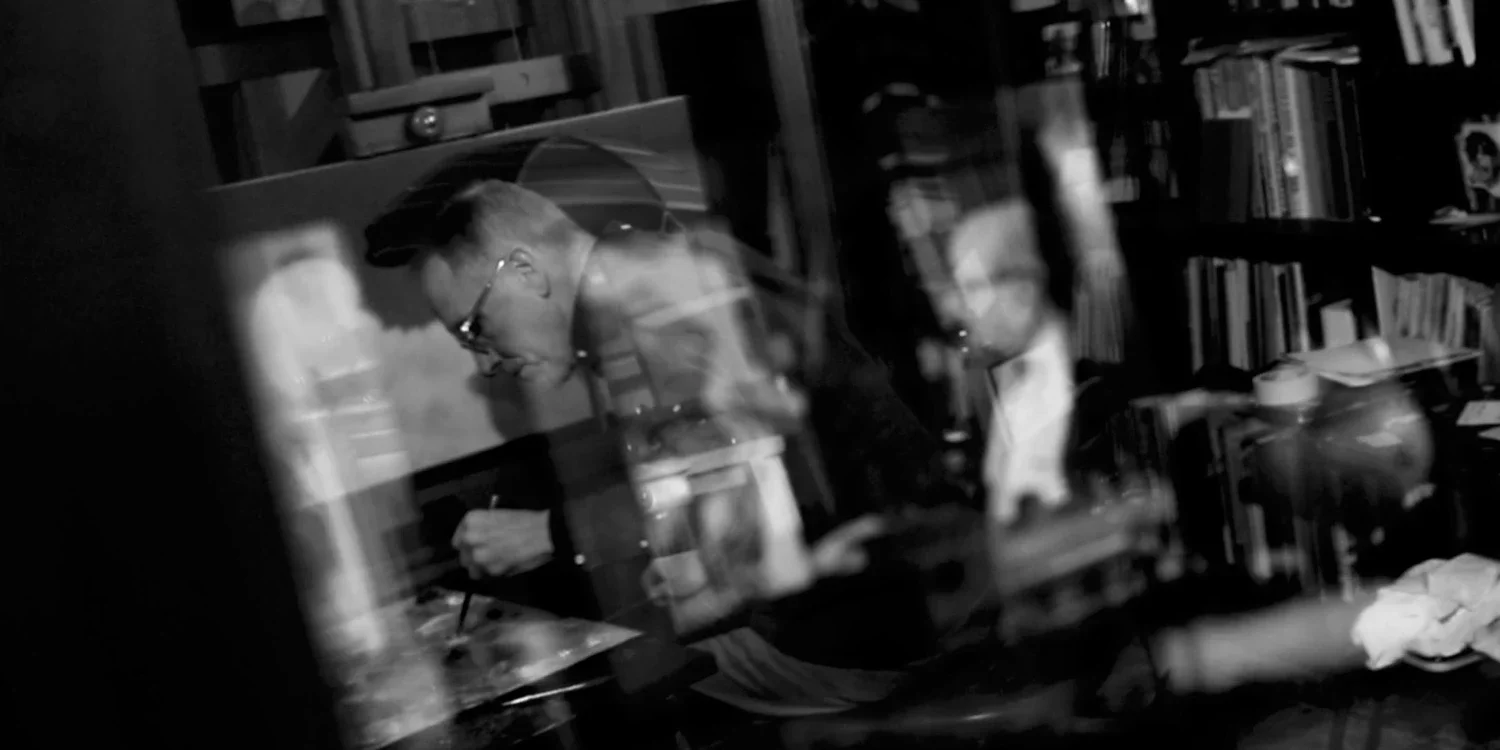
The above screen shot was from a footage focused on a framed picture of an old man painting in the foreground, then the focus moving towards the background revealing the current image of the artist painting. The old man was his great uncle, which in the film became the transition between the visual story of the old man towards the artist.
A Daily Practice Worth Returning To
The good news is that divergent thinking does not require a camera. You can practice it anywhere — walking through a market, sitting in a cafe, watching people move through a public space. The habit of asking 'what else is possible from where I am standing?' is a mental muscle. The more you use it, the more it becomes your default mode of perception.
Photography is often taught as a technical discipline. Exposure, focus, composition — these are the mechanics. But the work that endures, the images that make people stop and look twice, almost always comes from a perception that preceded the technique. From a photographer who saw something that was not yet visible to anyone else in the room.
Divergent thinking is how you train yourself to see what others miss.
WORK WITH ERWIN
If you are ready to develop this kind of seeing — not just technically, but perceptually and creatively — I work with photographers one-on-one and in small groups. My coaching is image-based, not curriculum-based. We work from your photographs, your instincts, and your goals.
— Critique Session — a focused 90-minute image review
— Private Coaching — 4 weeks, one photographer, complete attention
— Group Coaching — 4 weeks, maximum 4 photographers
— Long-term Engagement — 6 or 12 months for sustained development
Learn more at erwindarmali.com/coaching or follow the conversation at @coachingforphotographers.