How To Study Other Photographers’ Work To Get Better?
Dissecting Photographs Is One Of The Most Effective Ways To Learn
Sometimes a puzzle needs to be broken apart so we understand how each piece connects to create a complete work.
Breaking down or dissecting an interesting photograph allows us to observe how each piece affects the other.
The lack of storytelling is also a problem for most photographers. Often we do not realize that what we felt at the moment we took the photograph does not always translate to the viewers. We are stripping away our senses of sound, smell, the sequences before and after, and creating this one split-second shot of a moment, and it needs to be understood and felt. This takes a little bit more effort on our part.
What is essential to this story? And what does not need to be there?
We tend to focus on composition directly while forgetting the essence of the story.
The Photograph
This time we are dissecting a beautiful image by Rita Orkin, titled Watermelons.
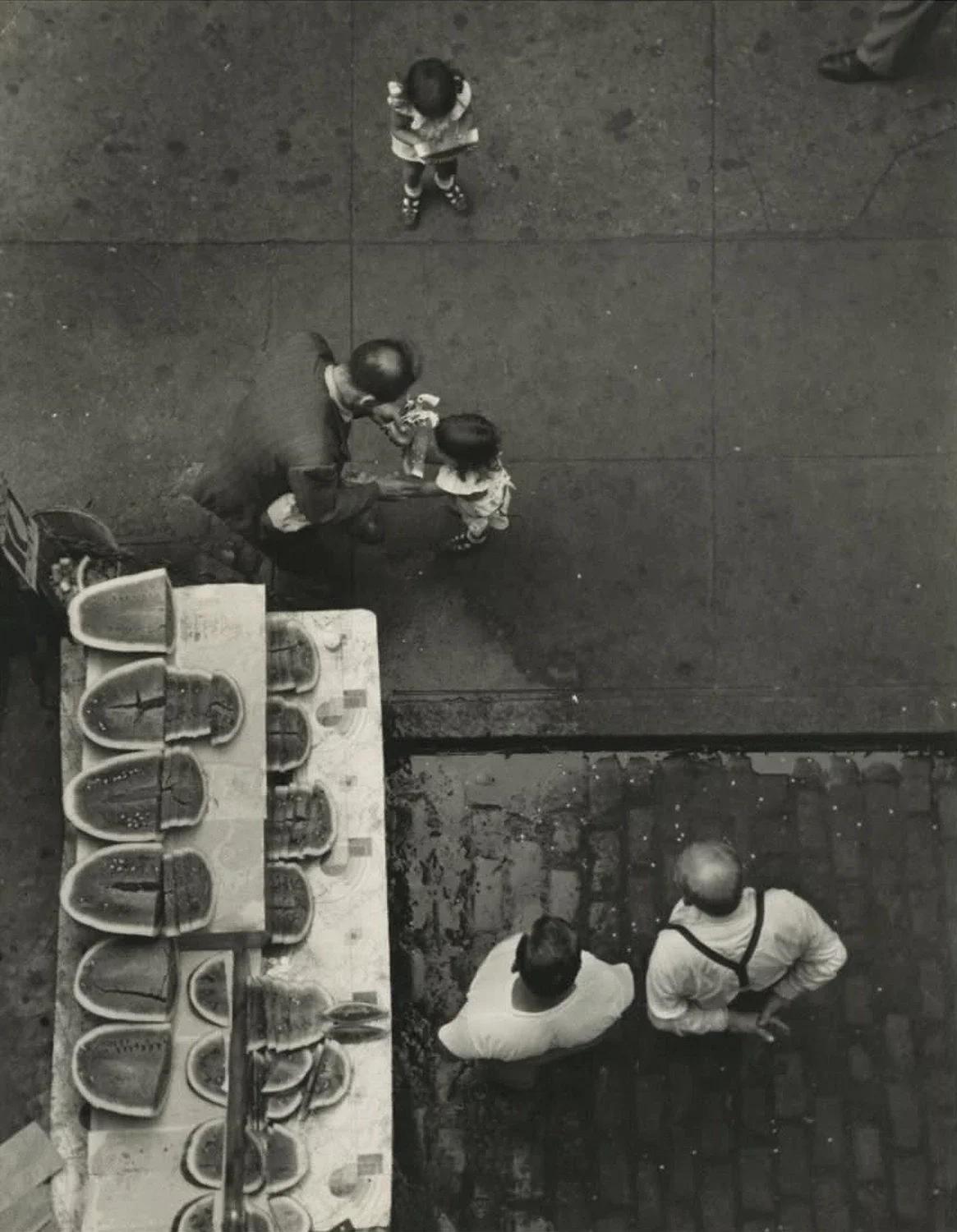
“Watermelons”, photographed by Ruth Orkin, New York City, early 1950s.
The Perspective
Photographed from her apartment window, the bird’s-eye view flattens the scenes and reduces them into shapes with only hints for us to identify the people we see. We then rely on their body languages to understand more.
These mysterious shapes make us want to see more of what it was shown:
It makes us think more and want to create stories from it.
The Story And The Protagonists
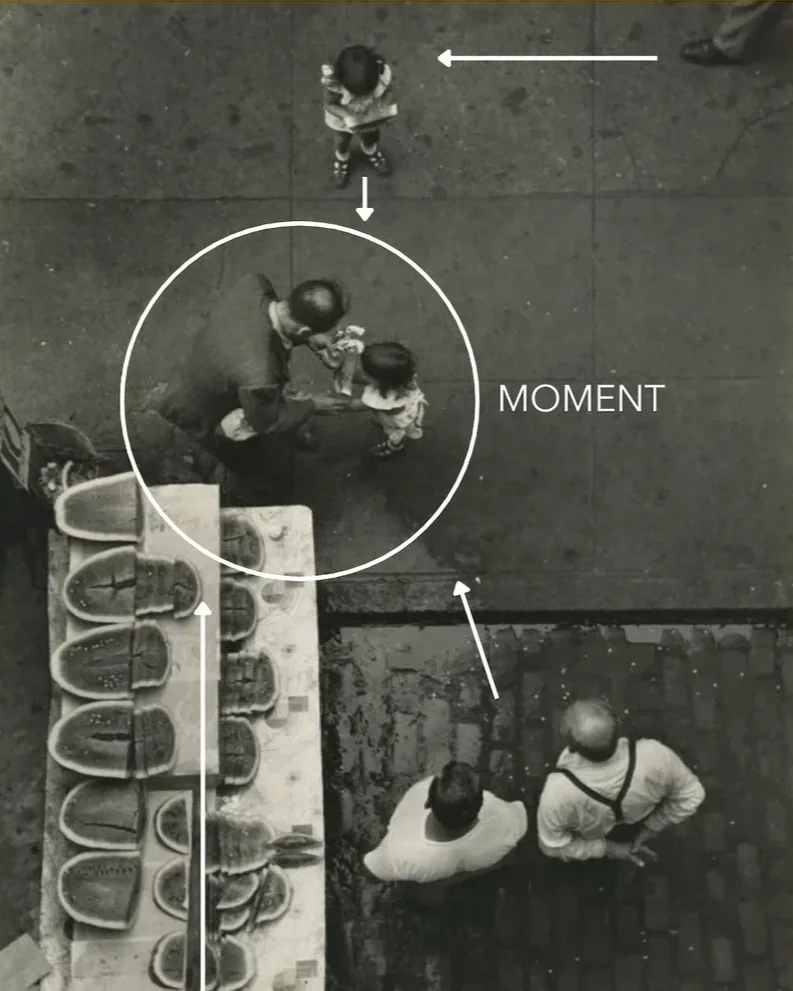
The story is about a beautiful little moment in an everyday life situation where a man gives a slice of watermelon to a child.
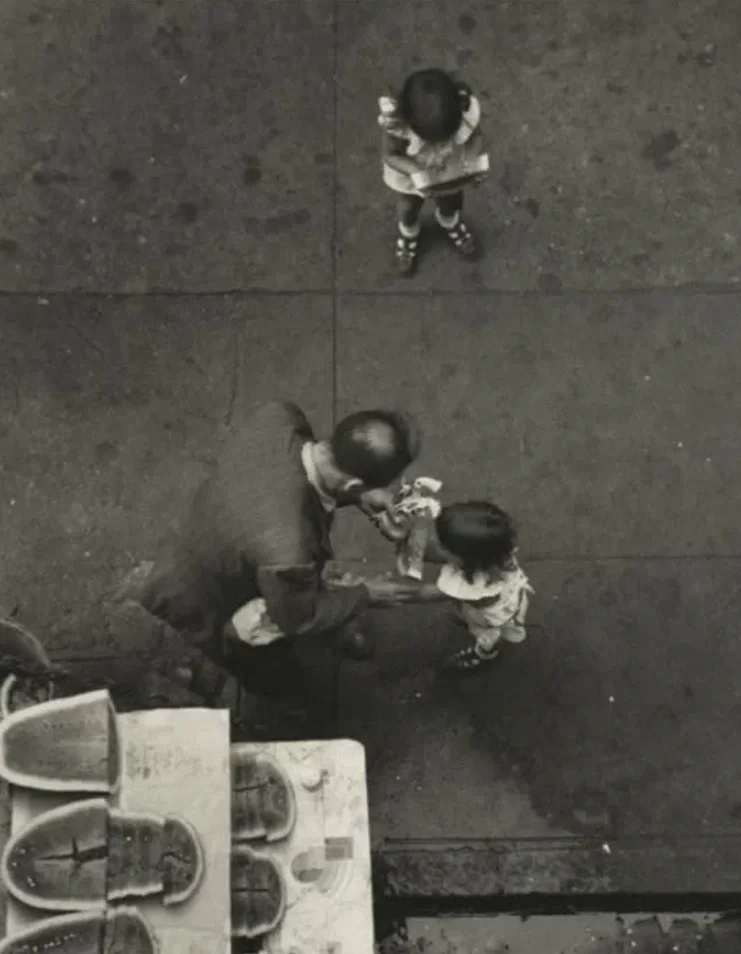
The Moment / Main Story
The old man is gently handing a watermelon to a girl. Just a couple of steps away, another girl is already holding her own slice of watermelon and is wearing identical shoes and dresses, insinuating that the girls are twins. It can be concluded that the man in the suit is the father of the twins. His body language reveals tenderness, caring, and love.
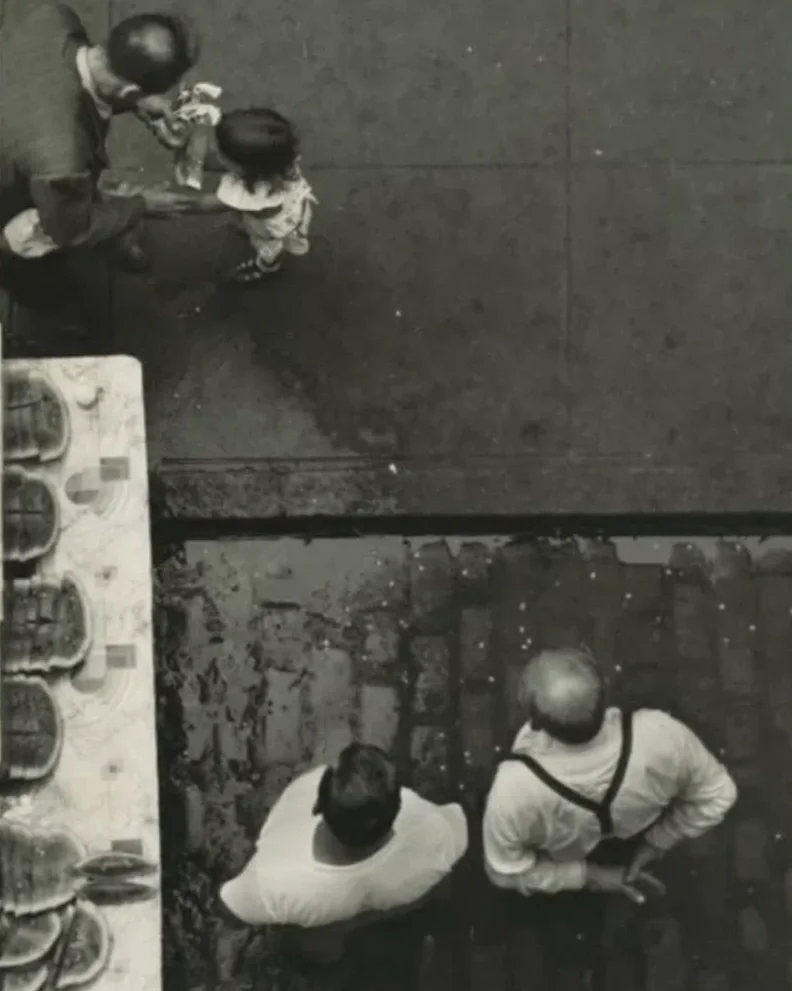
The Supporting Subjects
The two people in white shirts seem to be the watermelon sellers. They are probably related as father and son, and they are witnessing this moment. The older of the two seems to be watching intently.
How The Pieces Work Together
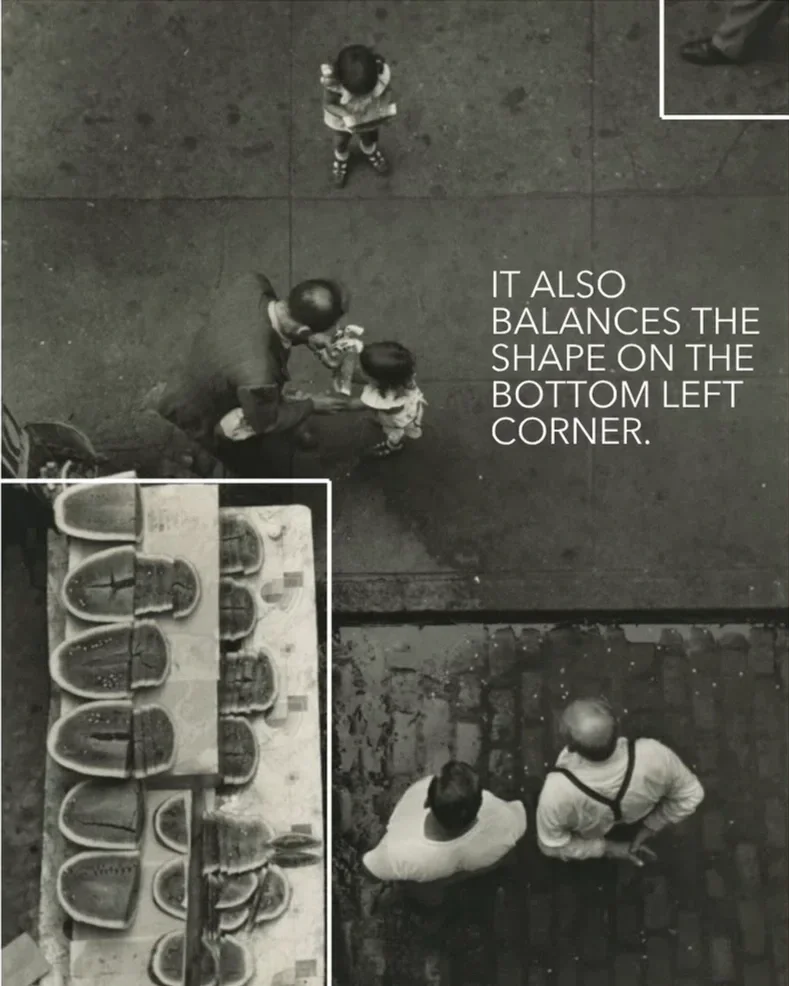
The Lone Foot, Balance.
The stand with watermelons is attracting a lot of our attention, but diagonally, the foot acts as a counterbalance for the frame.
The Invisible Leading Lines
Each piece within the frame is there for a reason: to guide us to the real moment of the picture.
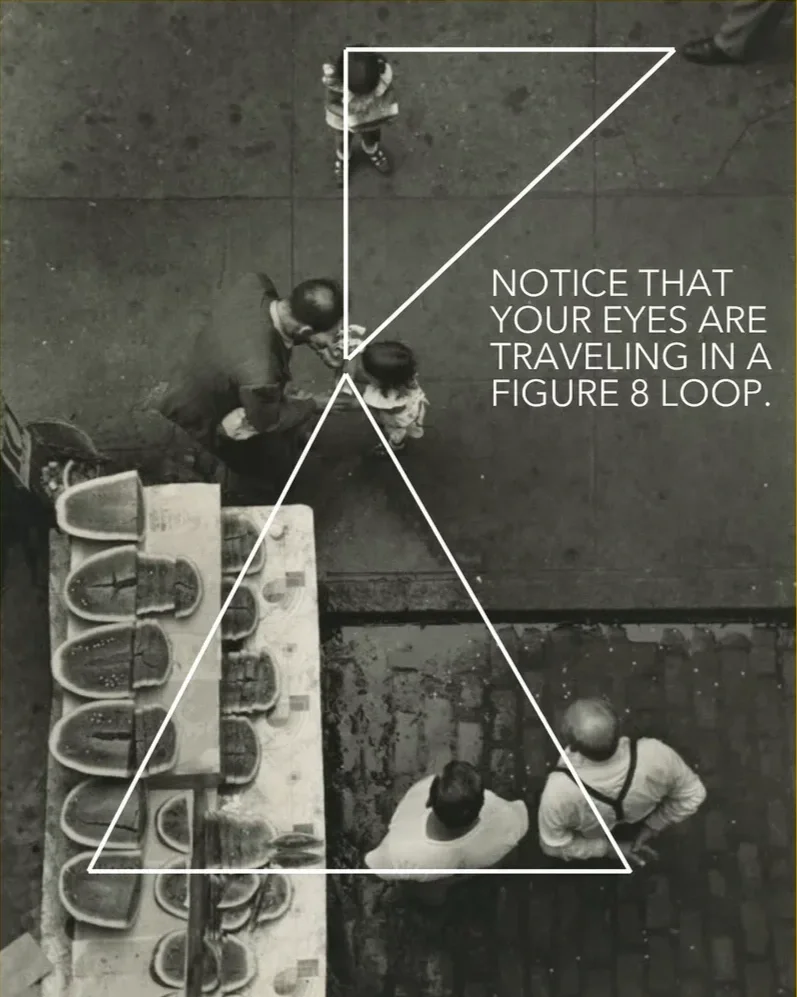
A Line Is A Direction,
A Triangle Is A Loop
Believe it or not, the foot on the top right corner is a very important visual piece. Each of the interest points creates triangular shapes within the frame.
With the foot present, there are two triangles formed; they converge on the main subjects twice, putting emphasis on the fact that this is the main point of interest.
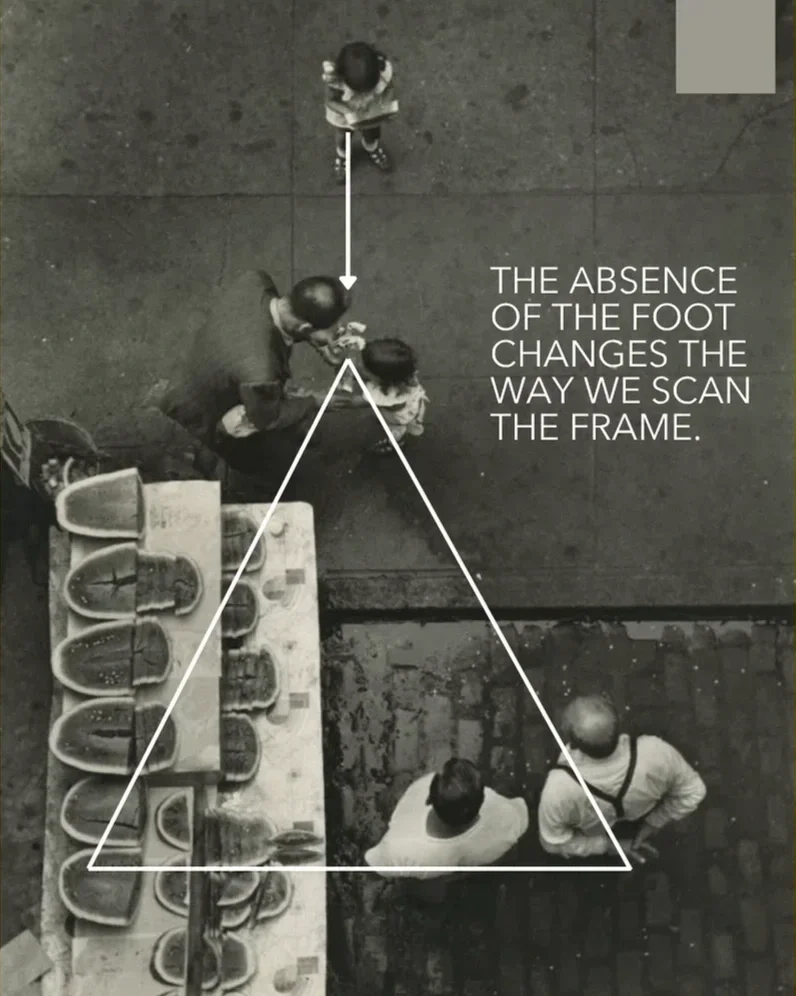
The Effect Of The Absence
Without the foot there, the triangle changes - the continuity of our eyes moving around is cut at the top. The balance is also affected.
What Makes This Picture Good
We can feel how sweet this little moment is. “What a good dad.” Seeing how gentle he is almost makes me hear what comes out of his mouth as he is handing the watermelon over. Perhaps even I can hear “Thank you, Daddy” coming from her.
This is the kind of feeling that is inherent in most of us. This is what resonates with the viewers.
The composition and supporting subject placements help us stay interested.
Like any great story, the way it is told is simple, but interesting - with all pieces working together to create the pathway to a clear, beautiful moment.
Even the title, I think, is interesting: one single word that symbolizes everything in the frame, in its core, watermelons. Not a mention of the father, or the twins. We are expected to find that out ourselves. The way we analyze the picture shows that.
Why A Deeper Understanding Helps Us Learn
Did Ruth Orkin consciously think about all these things when she was making this picture?
Most likely NOT.
Do we have to consider all these points when we are shooting?
NO.
So why do we even care?
Because understanding how things are perceived helps build up our vision, which eventually resurfaces when we photograph something.
It is knowing what needs to be there to build the image, and what doesn’t need to be there. It is about forming carefully placed puzzle pieces to make a good story great.
Consciously at first - and eventually - subconsciously.
When we can do it subconsciously, this is what people call:
Shooting with feeling.
Learn What No Other Photography Coaches Are Teaching
Through my Private Coaching Program, I help photographers find the clarity they need to execute what they envision.
Learn more about Coaching For Photographers programs >