What Are The Top Ways to Learn Photography (And What Each One Actually Costs You)
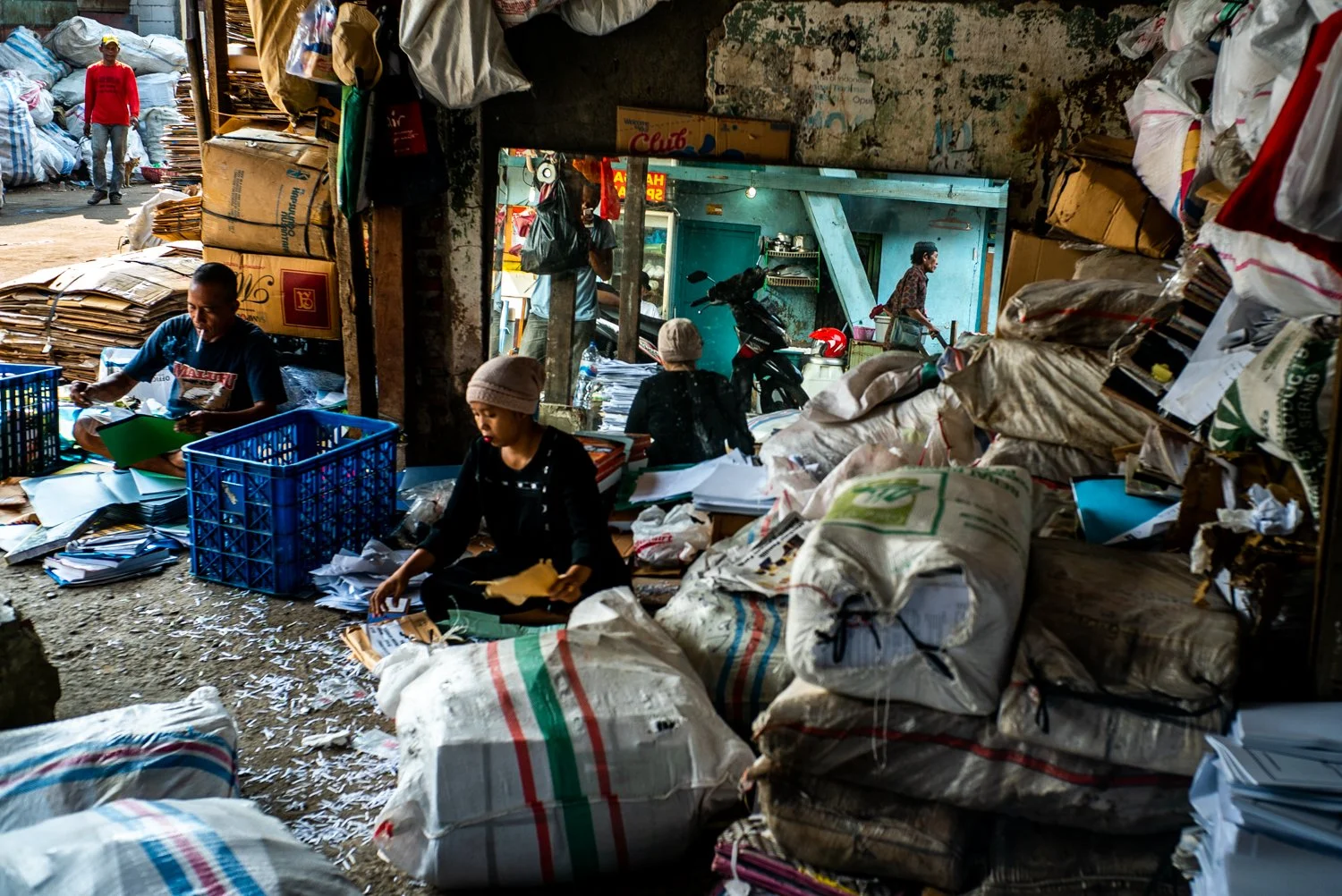
Waste recycler, Indonesia © Erwin Darmali
The real question isn't which one is the best. It's which one is the right fit for where you are right now, what you actually need, and how much you're willing to invest — in both time and money.
There is no shortage of ways to learn photography. A quick search returns thousands of courses, workshops, degrees, YouTube channels, and mentors — each promising that they hold the key. And honestly? Most of them do hold something useful.
I've been teaching photographers for years, and the most common mistake I see isn't choosing the wrong camera or the wrong lens. It's choosing the way and what to learn that is not ideal for them. People spend months in the wrong room, sometimes using the advice that is not applicable in the situations they are in. So here's a clear, honest breakdown of the main ways photographers learn, what each one genuinely offers, and what it will cost you to find out.
01. YouTube & Free Online Tutorials
This is where most photographers begin, and for good reason. The sheer volume of free content available — from understanding exposure to lighting ratios to editing in Lightroom — is staggering. Channels like Peter McKinnon, Thomas Heaton, and Sean Tucker have built careers teaching photography to millions, for free. If you're motivated and self-directed, you can cover a tremendous amount of ground without spending a dollar. The challenge is curation: there's no sequence, no feedback, and no accountability. Depending on what stage you are at, ou can spend three hours watching videos and still not know what to practice tomorrow.
PROS: Free and accessible anytime, enormous variety of styles and topics. Great for technical concepts — exposure, settings, gear. You can explore without committing to a direction.
CONS: Topic based — you learn in fragments. Not a conversation and no feedback on your actual images. Easy to mistake watching for learning.
COST: Free. The only cost is your time — which, depending on how you use it, can be the most expensive thing of all.
02. Online Course Platforms
Platforms like CreativeLive, Udemy, Skillshare, and MasterClass sit a step above free YouTube content. They offer structured courses, often taught by photographers with real professional credibility. CreativeLive's Fundamentals of Photography with John Greengo covers 107 lessons across 24 hours. Udemy's Photography Masterclass bundles over 23 hours with three instructors. MasterClass has Annie Leibovitz walking you through storytelling and emotional impact. These platforms work well for photographers who want more structure than YouTube but aren't ready to commit to a degree or private instruction.
PROS: Structured and sequenced — one concept builds on another. Taught by established photographers. Affordable access to hundreds of courses for one subscription price.
CONS: Still no feedback on your work — learning remains theoretical. Quality varies considerably by instructor. Easy to collect courses without finishing them.
COST: Individual courses $30–$150. Subscriptions: CreativeLive ~$149/year, Skillshare ~$168/year, MasterClass $180/year.
03. Photography Books
Don't dismiss this one. Some of the most formative learning in photography happens slowly, quietly, on the page — and books are still the format that forces you to sit with an idea rather than scroll past it. Technical books by Bryan Peterson or Michael Freeman build solid foundational knowledge. But the real game-changers are often the ones photographers don't talk about enough: monographs by Josef Koudelka, Daido Moriyama, or Alec Soth that train your eye simply by showing you what a photograph can actually be. Reading is underrated. Looking at great photography even more so.
PROS: Deeply concentrated, deliberate learning. Monographs train your visual eye in ways no course can replicate. Low cost, high return over time.
CONS: No interactivity, no feedback. Technical books can feel dry without a practice context. Takes longer to get results than video-based learning.
COST: $20–$60 per book. Monographs from established photographers can run $80–$150+. Used copies and libraries bring the cost to nearly zero.
04. Local Photography Clubs & Community Groups
Photography clubs are one of the most underestimated learning environments. You meet other photographers at various levels, you see how different people approach the same subject, and you get regular exposure to critique — which is irreplaceable. Many clubs organize photowalks, guest speakers, and portfolio reviews. Online communities — Flickr groups, Reddit, dedicated Discord servers — serve a similar function for those without a local option. The learning here is social and peer-driven, which suits some photographers far better than solitary study.
PROS: Real feedback, real community, real accountability. Exposes you to a wide range of styles and visions. Often free or very affordable.
CONS: Quality of feedback varies — not all advice is good advice. Can reinforce safe, conventional work rather than pushing your vision. Local clubs can have a dominant aesthetic that unconsciously pulls you toward it.
COST: Free to ~$100/year for membership. No tuition, but you need to show up consistently to get the value.
05. In-Person Workshops
Workshops are where learning accelerates. You're immersed, present, shooting alongside other photographers, and getting real-time feedback from someone who knows what they're doing. A well-run workshop compresses weeks of solo practice into a few days. They range widely — half-day genre-specific sessions, weekend retreats, week-long masterclasses, and international photo travel workshops that include location access you'd never find on your own. Great storytelling workshops such as Foundation Workshops can transform your way of seeing the world. You shoot differently when you leave than you did when you arrived.
PROS: Immersive and intensive. Real-time feedback on your actual shooting. Access to locations, subjects, and situations you wouldn't create alone.
CONS: High cost, especially for travel-based workshops. Quality depends entirely on the workshop leader. The learning doesn't always transfer once you're back in your own routine.
COST: Half-day workshops: $125–$400. Multi-day retreats: $500–$2,500. International photo tours: $3,500–$10,000+, Storytelling Workshops: $3500-$5000, total price may increase when taking consideration the travel, accommodation, and food.
06. Community College & University Courses
A single-semester photography course at a community college is one of the best-kept secrets in photography education. You get structured curriculum, access to studio equipment you'd never buy yourself, peer critique built into the class, and an actual instructor who will look at your prints. It's slower than a workshop and less glamorous than a masterclass, but the learning tends to stick. For photographers who want something more rigorous than YouTube but aren't ready for a full degree, a semester-long course is worth serious consideration.
PROS: Structured, equipment access often included, peer critique built in. Significantly more affordable than a full degree.
CONS: Fixed schedule — less flexible than self-paced options. Quality of instruction varies by institution. May focus heavily on traditional or academic approaches that don't reflect how photography is actually practiced today.
COST: $200–$500 per semester at community colleges. In-state public university courses run roughly $31–$330 per credit depending on residency.
07. Formal Degree Programs
A photography degree — whether a two-year associate's or a four-year BFA — is the deepest institutional immersion available. You build a comprehensive body of work, study visual theory, develop a professional portfolio, and graduate with credentials that matter in specific sectors of the industry, particularly photojournalism and fine art. Schools like SCAD, the New York Institute of Photography, and various state arts programs have produced serious working photographers. But this path makes the most sense if you want to enter the field professionally in a context where that credential carries weight.
PROS: Comprehensive, theory-grounded, credential-bearing. Portfolio development and peer critique built into every semester. Access to professional-grade studios and equipment.
CONS: Very expensive, especially at private institutions. Long time commitment — two to four years. The photography industry rarely requires a degree; skill and body of work matter more than a diploma.
COST: Associate's degree: $5,000–$15,000 total. Public university BFA: $10,000–$30,000/year. Private institutions like SCAD run ~$41,000/year. Full four-year programs can total $40,000–$160,000+.
08. Private Photography Lessons
Hiring a local working photographer for private lessons is a fast, direct route to improvement — especially when you have a specific goal and want it addressed immediately. A good private instructor watches you shoot, corrects your technique in the moment, reviews your images alongside you, and tailors every session to exactly where you are. The learning is fast precisely because there's no wasted content. The challenge is finding someone whose work you actually respect, whose teaching style suits how you learn, and whose rate you can sustain over time.
PROS: Personalized — every session addresses your specific gaps. Fast feedback loop on your actual shooting. No curriculum to work through that isn't relevant to you.
CONS: Higher cost per hour than group options. Technical skill and teaching ability are different things — not every good photographer is a good teacher. No community or peer learning alongside it.
COST: $75–$200 per hour. Rates vary significantly by city and the instructor's experience level.
09. Online Mentorship & Coaching
© Erwin Darmali
There's a version of photography education that doesn't fit neatly into any of the categories above — and it's the one most serious photographers eventually find their way to. Not a course. Not a workshop. A sustained, one-on-one relationship with someone who has already walked the path you're trying to walk, and can see where you are on it more clearly than you can. While most of these mentoring services are about business, there are some that are catering to diving deep into photography. The best mentors and coaches aren't teaching you photography — they're reading you as a photographer. They notice what you gravitate toward before you do. They catch the gap between what you intended and what the image actually says. What you know you need going in is someone to look at your work honestly. What you don't realize you need until you're in it is someone to name the pattern across your entire body of work that you've been too close to see — and then point you in the direction only you can go.
PROS: Sustained, personalized guidance from someone who has done the work themselves — not just studied it. Addresses vision and creative voice, not just technique. Surfaces the patterns in your work you can't see from the inside.
CONS: Requires a real foundation to build on — not the right entry point if you're still learning the basics. The relationship is only as valuable as your willingness to be honest about where you are. Higher investment than passive or group learning.
COST: Varies widely by mentor. Structured programs from established photographer-coaches typically run $300–$2,000+ depending on duration and depth.
For a closer look at what this kind of engagement can look like, visit coachingforphotographers.com.